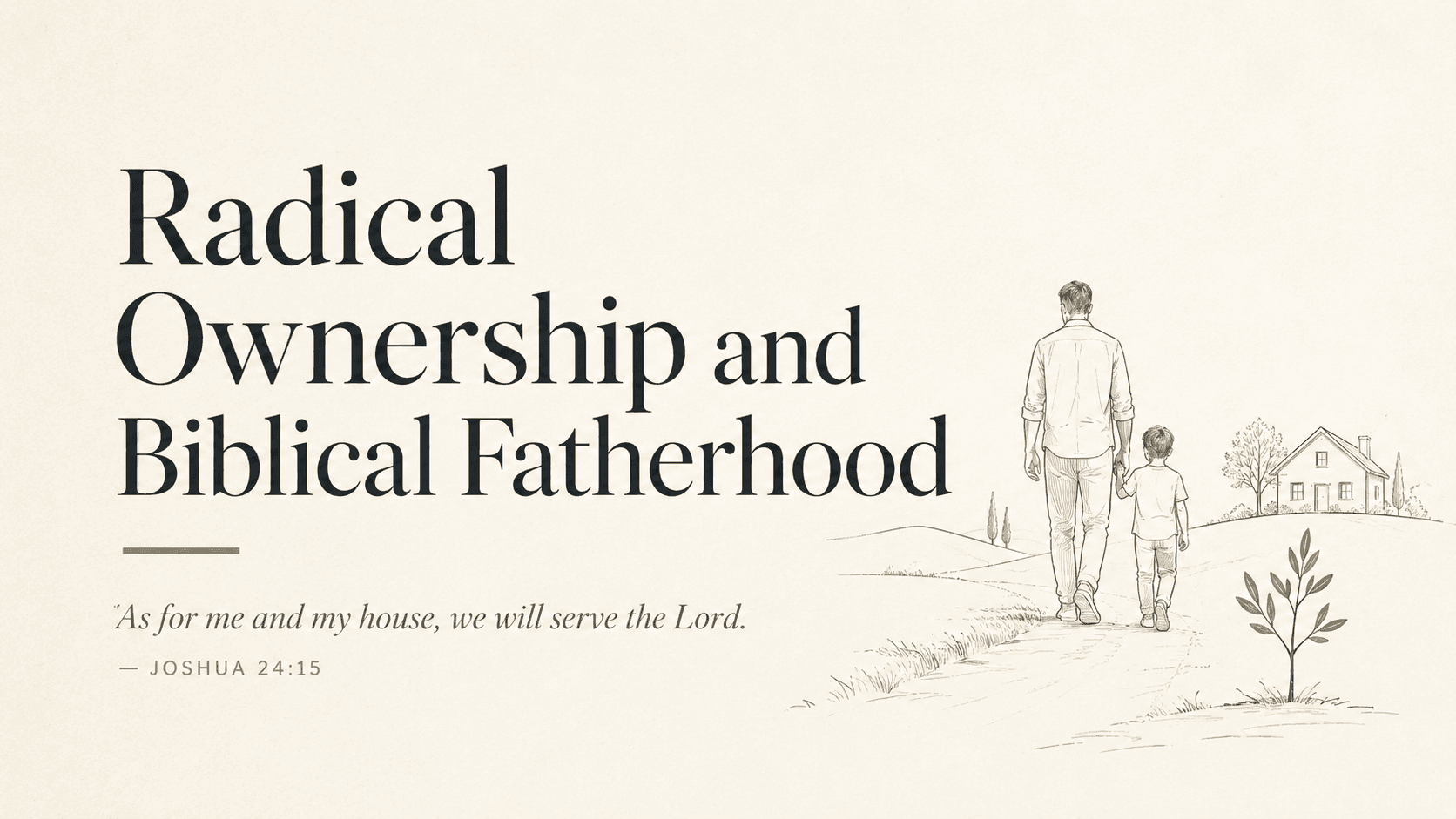
Radical ownership and biblical fatherhood
A father’s responsibility in the home is measured by the good he cultivates, not the grip he keeps.
Joshua’s words in Joshua 24:15 come at the end of a long life of leadership. He had seen the Lord keep His promises, carry Israel through battles, and bring His people into the land. When he says, “As for me and my house, we will serve the Lord,” he is placing a spiritual stake in the ground for his home. His sentence honors the personal responsibility of every person before God while placing the weight of leadership where it belongs. He takes responsibility to set the expectation and the tone.
Every home is being discipled by something. A father can share an address with his children and still leave a father-shaped gap through spiritual passivity. If he will not set the tone, the tone will be set by habits, screens, peers, and cultural assumptions that never have to ask permission. Drifting always has direction, and the current of the world pulls hard. Godly leadership gives a household a clear center, so the family knows what is treasured and where the house is going.
Radical ownership begins with the man himself. Before a father concerns himself with whether his family respects his leadership, he needs his own life surrendered to Christ. If his appetites rule him, the lesson will come through. If his anger governs his words, the lesson will come through. Repentance is a better beginning than volume. A man who takes ownership learns to bring his own life before God, confess what needs to be confessed, and become the kind of example his family can safely follow.
Control reaches for immediate compliance and calls it leadership. Godly authority takes the slower road of presence, sacrifice, and consistency. Jesus had all authority, and on the night He was betrayed He picked up a towel and washed feet. That scene gives Christian fathers their model. Authority in the home is never permission to use strength for selfishness. Under the rule of Christ, strength bends low for the good of the people entrusted to it.
That is why the word ownership has to be handled carefully. It can be twisted if a man hears it as possession. Biblical ownership treats a wife and children as a treasure that calls for patience, protection, and attention. A man cares for what he has been entrusted with. He cultivates the soil where his wife can blossom. He guards the conditions where his children can grow in holiness. He stops treating family as an interruption to his life and starts seeing them as part of the very stewardship God has placed in his hands. The line needs to be said plainly:
Radical ownership is NOT overbearing control -- it's a loving example. Ownership isn't just creating boundaries; it's cultivating soil for growth. Childish men have to control their families. Mature men take ownership and responsibility.
— A Fortified Father
Nehemiah 4:14 frames the fight around people rather than property: “Do not be afraid of them. Remember the Lord, who is great and awesome, and fight for your brothers, your sons, your daughters, your wives, and your homes.”
Begin today by repenting where your grip has replaced service and by taking up the patient work of cultivating the people God has entrusted to you.
For the entire sermon, click here.